Victoria (2015) Review

Have you ever watched Birdman?

You know, that movie that everyone raved about because of how seamless it felt, and it looked like the camera never even cut. It was truly impressive which is why it was awarded best picture for its year. However, a year before Birdman came Victoria, a film by Sebastian Schipper, in which a girl in a foreign city is paraded around town by a group of friendly guys, having a blast while committing small misdemeanors until eventually, just as every story does, the stakes heighten. Oh and did I mention it was shot in ONE SINGLE TAKE?!

None of that gimmickee bullsh*t you see in Birdman. They don’t ever pull the old, “super zoom into the door and cut” trick that fools us into thinking the shot never ended. No, this movie brings you from the first minute where we’re first introduced to Victoria, to the last, where we end our journey with her walking down the streets of Berlin, and it doesn’t stop rolling. Apparently, they got funding for just three tries (again three single takes), and third time was definitely the charm in this case.

Beyond just the accomplishment of successfully filming this German adventure in just one beautiful take, the story, acting, and camera work were all phenomenal. Do you realize how hard it is for a camera man to get fantastic shots when he’s been filming nonstop for two plus hours? It’s indescribably difficult and the fact that they were able to showcase such amazing camerawork whilst doing so is probably why the director made sure the cinematographers name was the first on the credits.

Couple all this with the raw, unfiltered acting from our five main protagonists and what you get is a one of a kind film that has been categorized as a must see. Laia Costa, who plays Victoria, wasn’t able to break out of character for the entirety of the two hour and twenty minute run time and boy did she do an exquisite job of not only remaining in, but becoming her character. Through all the heartbreak, frustration, excitement, ecstasy, and pure anxiety that this movie immerses you in, the actors hold firm to their roles, providing one of the more convincing stories we’ve ever seen.

Now, leave this page, find some way to watch this movie. Don’t look it up, read about it, or watch a preview, none of that. This isn’t a movie that you have to like, so no need to analyze whether or not you want to watch it, since you have to watch it. Sit back, press play, and enjoy the experience.

Verdict: 4.75/5
Pi (1998) Reaction: From Infinity to Duality

PiArnofsky

I just watched Pie, the first film by Darren Aronofsky, for the second time. I have thought deep into many concepts tonight, and have come up with a new ratio: the ratio between opposites and infinity. I will try to explain this as carefully as I can, because the Illuminati is considering recruiting me.

We humans have 2 normal eyes, and a Third Eye. We use the 2 normal eyes for logical, physical thought about the tangible realms. We use observations made by this set of eyes to process our physical world. We use logic to see. However, all we see with these 2 eyes can be likened to Plato’s metaphor of the Cave. The observer, who is inside the Cave, can never conceive of the true outside world. It is incomprehensible.

Everything we see in our quasi-3D, 2-eyed world is logical. We can use measurements to quantize all sort of data from our physical world. The physical world is filled with apparent opposites, on/off states, 1s and 0s.

It is binary.

Our Third Eye takes us out of this binary cave and places us into the infinite realm. What we cannot quantize is emotion. Emotion is infinite.

The Third Eye is our view from above. It’s feed comes from outside of Plato’s Cave. We can use it to see the simplicity of our 2-eyed, 3D world, the underlying patterns behind it. We use our Third Eye to perceive the duality. This outside processing is not logical, no; it is emotional.

We use emotions to perceive logic. Consciousness powers the facilitation of data between our 2-eyed and Third Eye systems. This communication occurs between duality and infinity. Our consciousness is the mediator between these two realms.

Consciousness, as far as we know, can only access one of these realms at a time. For this is why we cannot be both asleep and awake, both alive and dead. We can only be one or the other. We can only switch between duality and infinity; we cannot be both at once.

The path between duality and infinity is a spiral. This spiral is the vessel of creation in this realm. Followed outward, a spiral creates an infinitely expanding pattern from a single point. Pure emotion. Conversely, if we follow a spiral inward, we reduce an infinitely large pattern to that single point. That single point the final step before the void, which exists between infinity and duality. Pure logic. This point is brought up in Pi, when Max and Sol are playing Go and discussing probability. Sol states that at the beginning of a Go game, there are seemingly infinite possibilities for the arrangement of the pieces. Max, however, counters that right before the end of the game, there is only one possible move left.

Throughout nature, we find examples of the golden ratio. Life follows this sequence as it expands. Can we retract life with that sequence? Can we switch from emotion to logic? Is logic truly death, or is it life, as something else?

If consciousness is a light switch, life is when the the switch to ON and death is when the switch is OFF. Life is emotion. Infinite. Death is logic. Binary. The switch itself, the in-between, is consciousness.

How can we become fully aware of consciousness itself? We must reduce consciousness to pure logic. This will be the death of consciousness, yes, but also the awakening of a new understanding of the ratio between the infinity and the duality.

We must create a new state within the void that exists in between the ON/OFF state. We must enter this state and exist within it in order to achieve a true understanding of the link between the two most important opposites.

By reducing emotion to logic, we can understand the in-between. Pi postulates that we can do this with numbers.

Old Film Made Me Realize Just How Much Religion Sucks

Sup Bros

To open this, I wanna say, I’ve got nothing against you faithful Bros. I respect your right to believe in something, I respect you and your opinions. So, since I expect the same from all Bros, if you see anything that offends you in this post, I’m not sorry Bro.


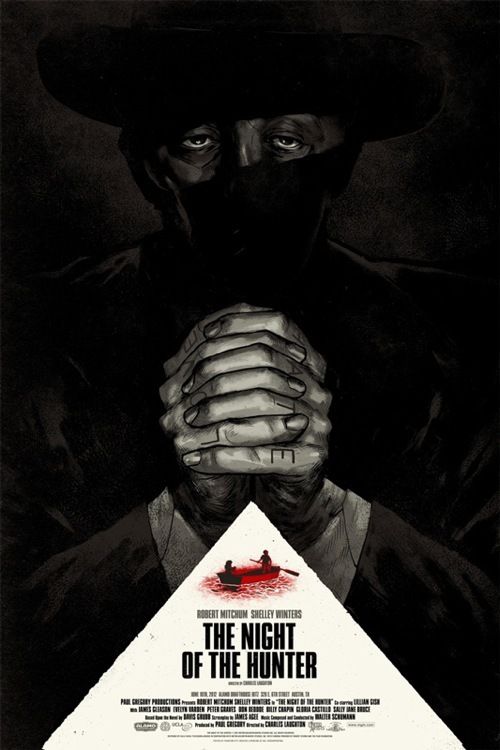
For almost my whole life, I’ve held strongly to basic atheist ideals, but recently a film has shown a deeper truth into just how much organized religion blows. Devoid of all it’s corruption, violence, and blatant mind control-esque tendencies, religion is also a safe haven for libido weakening men. Which come to realize it, may be the result of all these recent sex scandals involving little boys that have catapulted the catholic church into conflict with the law. Either way, sticking to my topic I want to talk about a movie called The Night Of The Hunter and how it further opened my eyes to it.

This movie, when it first released, was a tragic failure, however now it is looked at as a masterpiece. In fact, some film databases place it in their top 5 movies of all time (Cahiers du cinéma has it at #2). If we watch the movie, we see exactly why. It has an interesting plot involving the quest of a corrupt preacher for some $10,000, some interesting characters – both child and adult – who go through complex growth, and displays of gorgeous set design. It also has a great morale to it, which includes the concept of hunter and pray amongst us everyday Bros and the two sides of the faithful Bros: corrupt and morally righteous. It’s highly recommended to all classic loving Bros out there, but be warned, this one is ancient.

Moving on to my realization, the film also showcases some rather cringe-worthy aspects of religion. To tell it quickly, the preacher is on the hunt for money that was stolen by a man he met in prison who is to be hung. This man sleep talks all the details of where he’s from and the preacher tracks down the family, wives the widow, and interrogates the children about said money. There’s a scene in the movie in which the preacher shockingly declines a sexual offer from an obviously horny, sexy woman, giving all us provocative Bros massive blue balls. At any rate, the preacher explains that her body, no matter how tempting, is to be used for mother-bearing purposes and none other. Instead of DM’ing her side, or going bisexual, she decides to do the only logical thing: pray.

“[praying] Help me to be clean, so I can be what Harry wants me to be.”

Need I say more bros. If you watch the movie, even as devote Catholic, Christian, Scientologist, whatever; it’d be hard not to notice the downright preposterous ideals that religion allows and preaches for. I would go on to list these instances in the film, but given that it is Bro-proved, I urge you to see for yourself.

I’ll end with this with a fact.

Up until they realized it could be used for bettering their religious propaganda. The catholic church actually banned all form of play writing and performing. Just imagine, what would’ve happened if some seriously sadistic faithful Bros got their hands on Shakespeare.